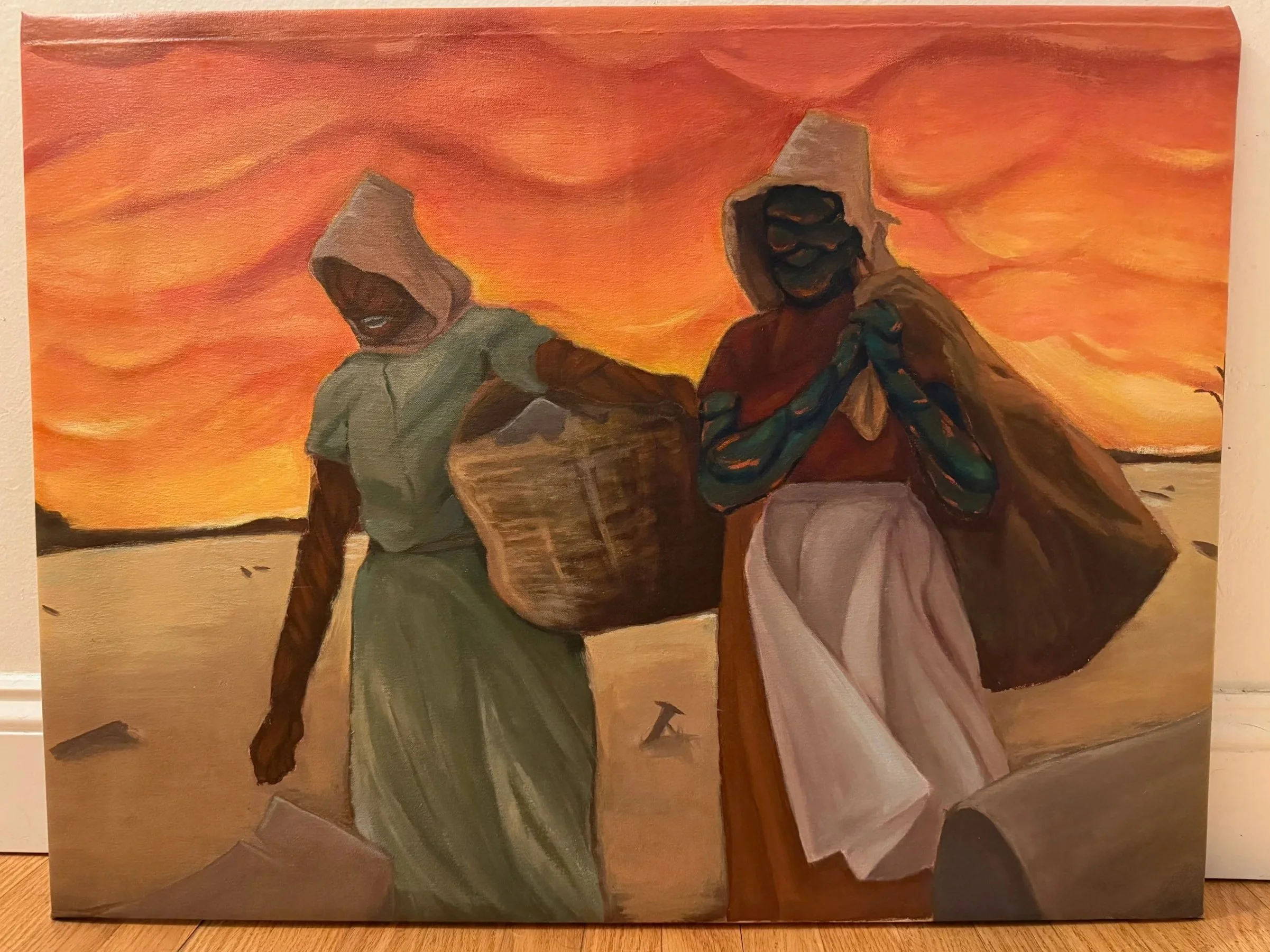
"Visions of the Future"
"The Cotton Pickers" by Winslow Homer was painted directly after the reconstruction era, and depicts two formerly enslaved women still condemned to work in the cotton fields, one of the women looking into the distance with an intense feeling of melancholy.
"Visions of the Future" is a twist on Homer's painting and depicts a dystopian setting with two ethereal figures in the same position as the two formerly enslaved women, cleaning up at the world's end after the events of a supposed apocalypse. The desolate environment and strong warm hues take inspiration from the works of Beksiński and dark surrealism movement to further push an eerie, gloomy atmosphere. In this painting, I expanded on Homer's idea of nothing changing in the context of America's treatment of African Americans and asked myself, "what would it be like if we continue to allow deadly pollution and rampant human rights violations to thrive in the world?".
Both of the beings represent forces of life that will outlive humanity, but will not outlive humanity’s impact. The figure on the right is a mass of branches interlocking similarly to human muscles and represents plant life on earth. However, the branches do not have any leaves or berries in order to represent how all fleeting and delicate lifeforms have been destroyed, leaving only the hardened, sturdy core. The figure on the left is an ooze of sludge which represents water, the lifeblood of every organism since the creation of life. The turquoise undertones and bright orange highlights as well as the figure’s viscous property are meant to resemble oil spills and pollution which has overtaken the normal qualities of water. The intention of my painting is to serve as both a cautionary image and an inspirational message in order to encourage people to continue the fight for change. On one hand, I want others to feel the same unease that I feel about a future without reform put towards civil rights and preservation. However, I tried to maintain the same gracefulness that the two girls had in the original paintings with the two figures in my painting because I view them as a symbol of perseverance. I hope to send the message to others that no matter what happens in this world, nature will persist through it all.
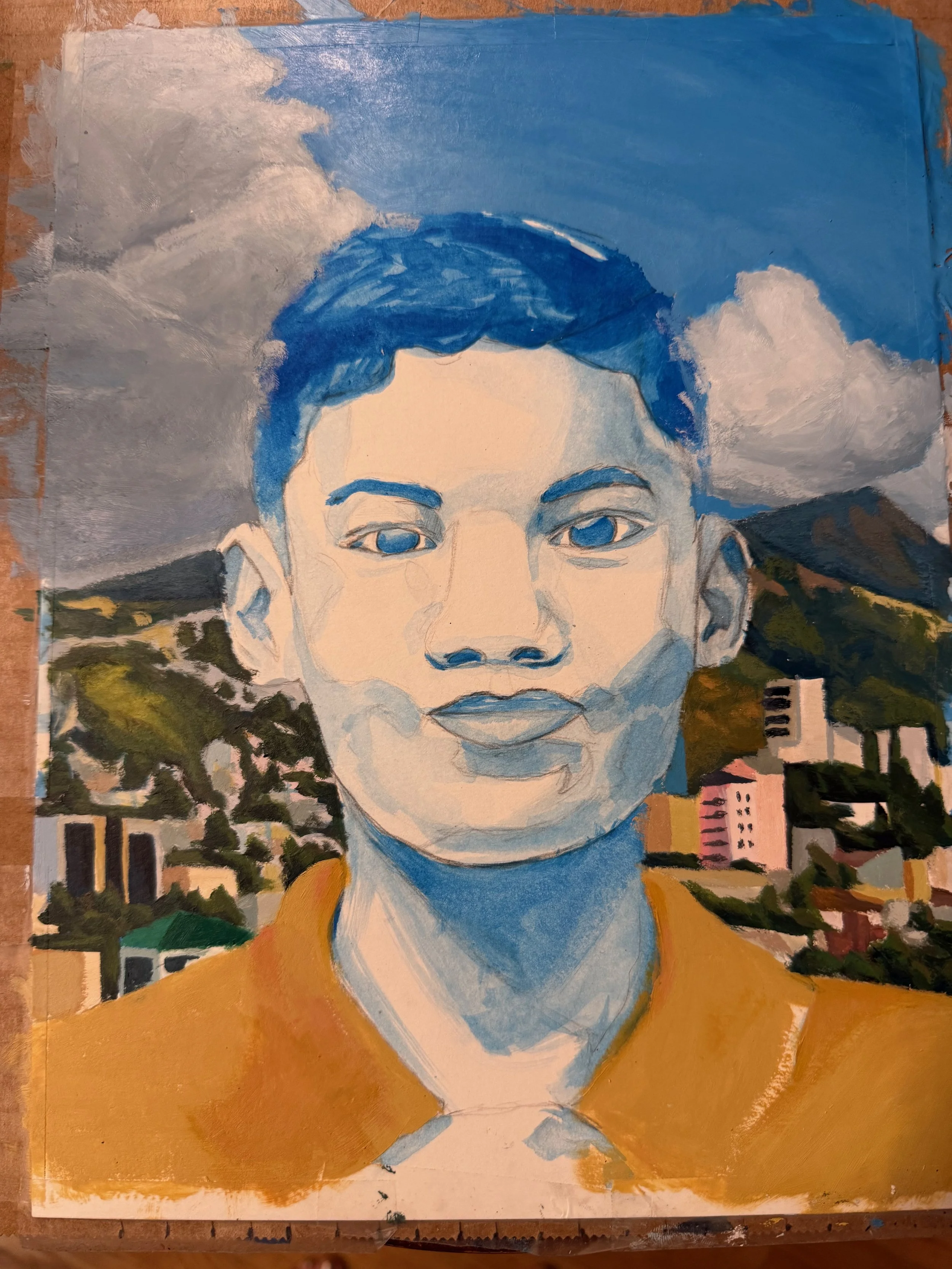
“Portrait of Anderson” - acrylic on canvas
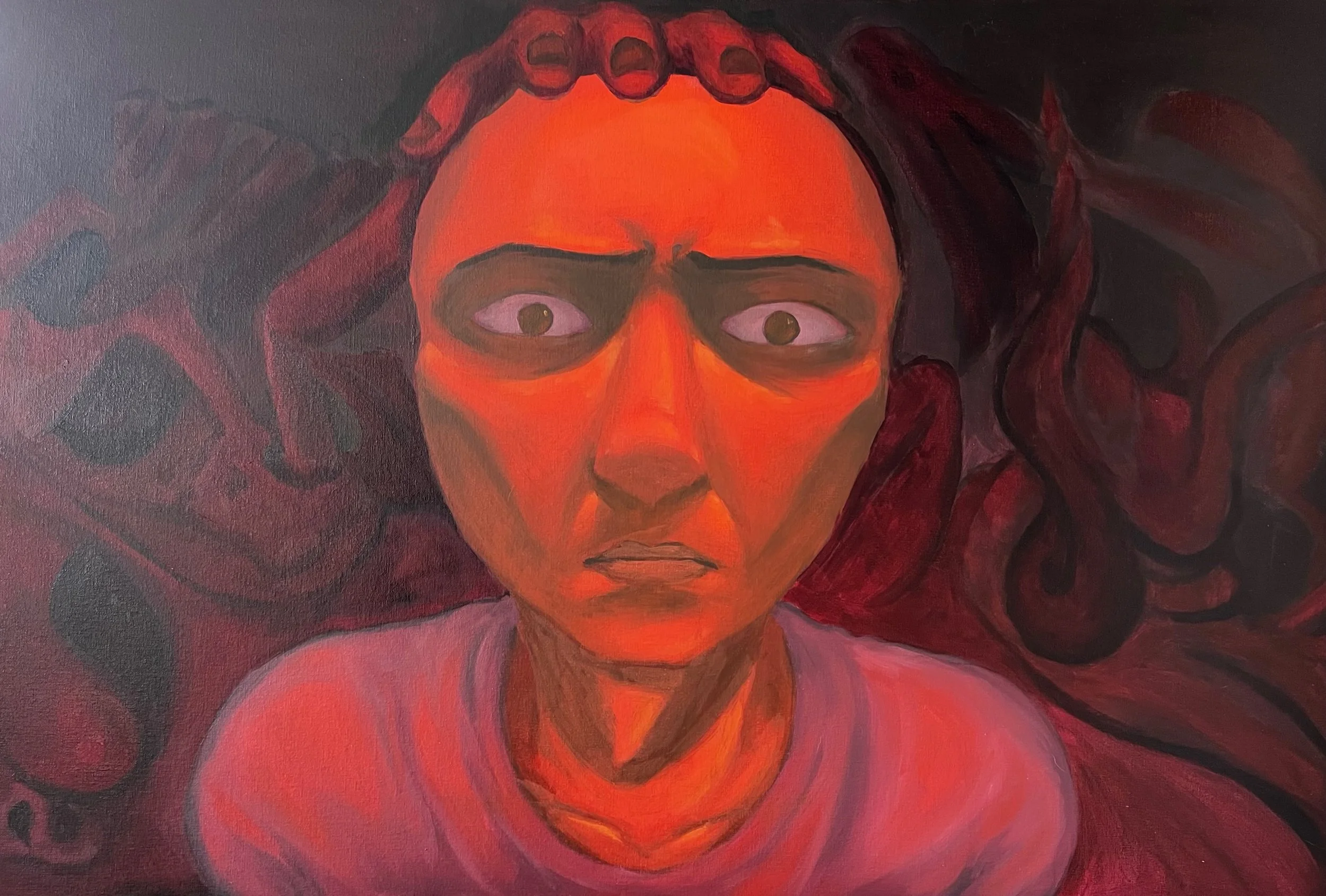
“The Shunting” - oil paint on canvas
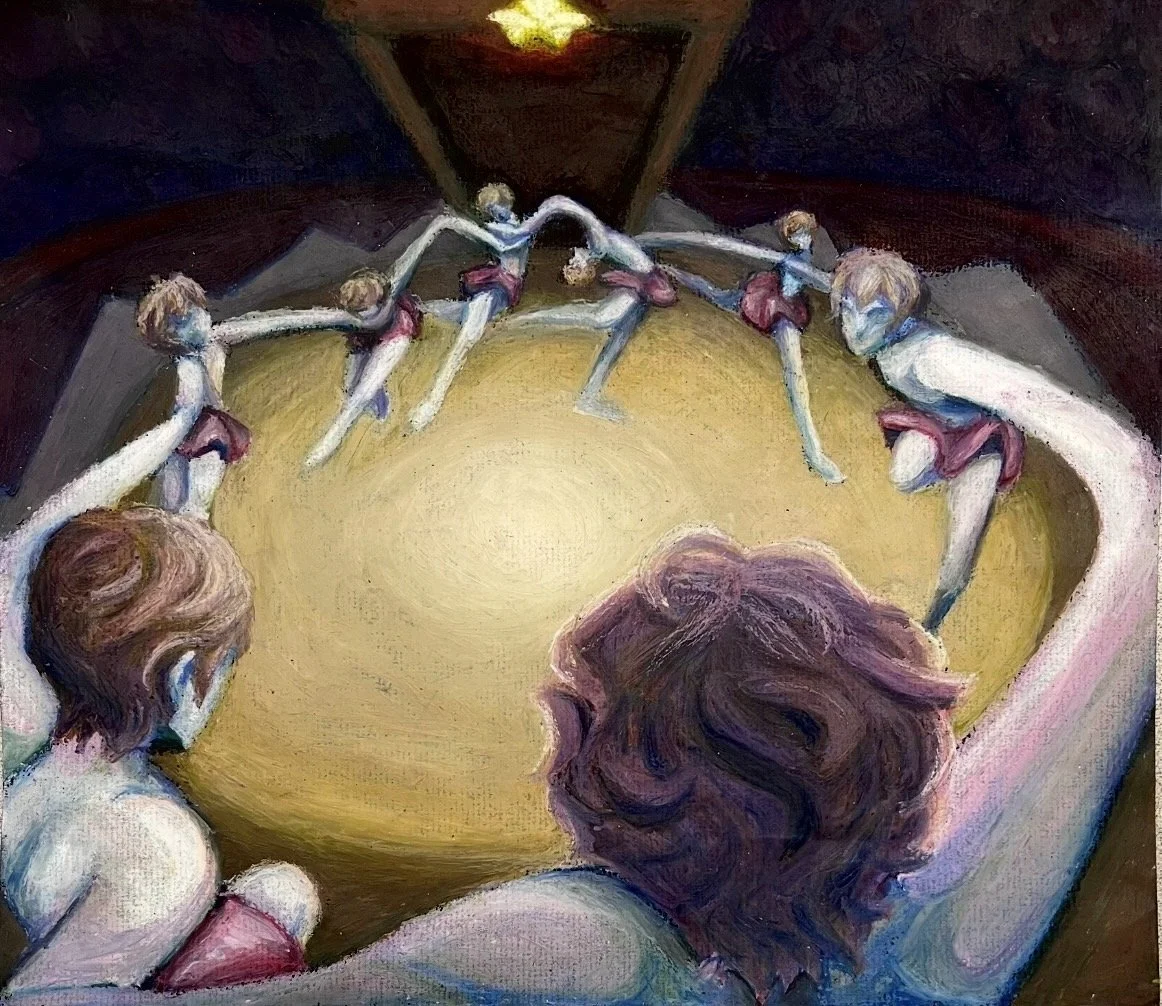
“The Dancers” - pastel on paper
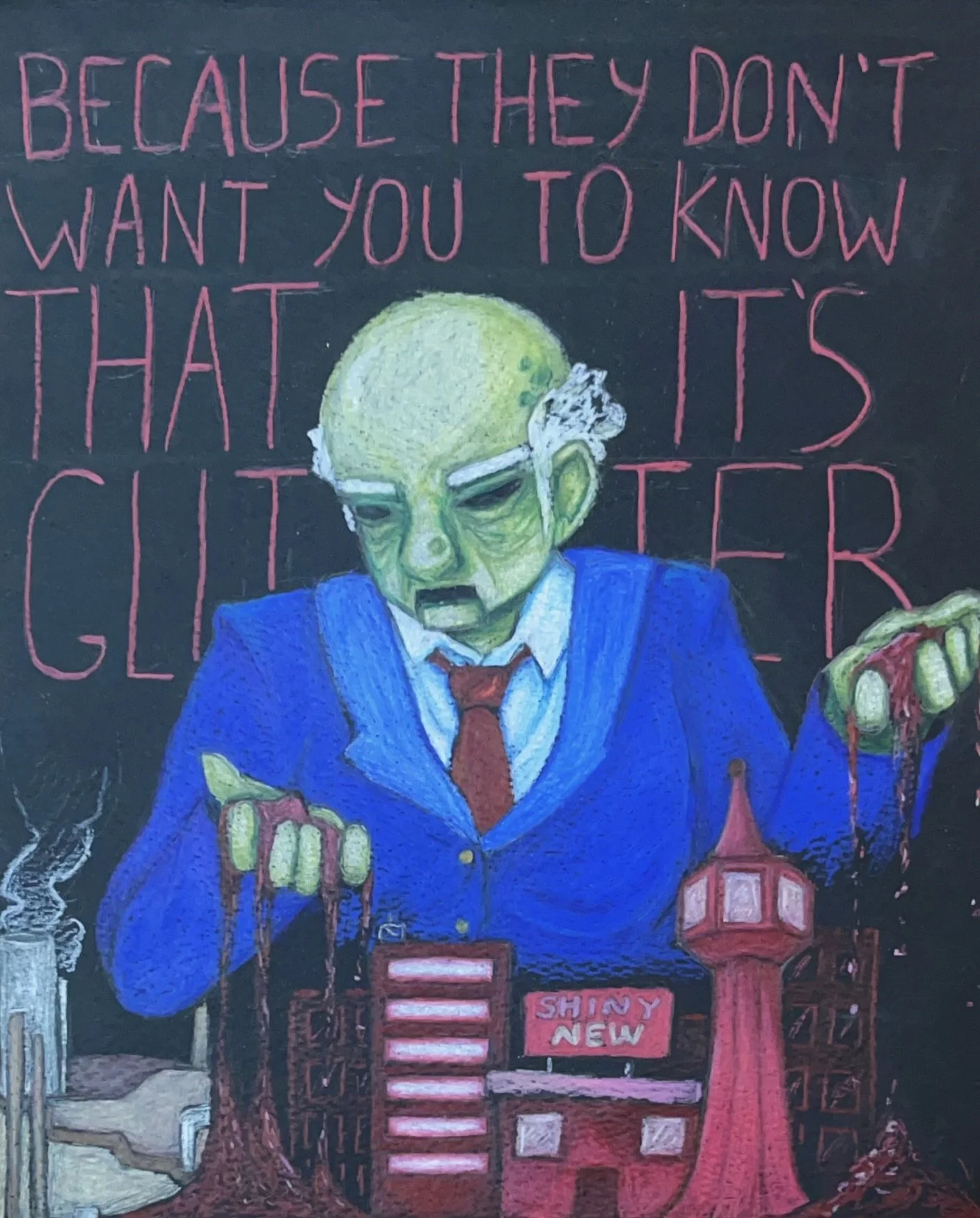
“They Don’t Want You to Know That it’s Glitter” acts as a commentary on how corporate greed has had a detrimental impact on society that goes largely unnoticed by many people due to distractions and deception that are pumped out by the corporations.
Here, is a businessman who is pouring glitter onto a factory and making it become a big city. This represents how companies use big flashy things to take attention away from the inner workings of their businesses but-much like glitter-these shiny distractions are mostly fake and materialistic. The factory being placed far to the side is much like how companies want to push their practices out of the public’s view. The glittery city is a small reference to how affordable housing has become almost unobtainable because greedy people keep using gimmicks to inflate the price of a property, like dumping a layer of glitter over it.
The phrase, “Because they don’t want you to know that it’s glitter” comes from an interview with the leading glitter manufacturers who, in response to being questioned about the secrecy regarding their largest clients, gave that very cryptic answer. This quote is very striking to me because it’s a chilling insight into how much of the process that goes into making a final product is hidden from us as consumers. Additionally, glitter is a microplastic which makes it very harmful to the environment, so by choosing to mass produce and sell glitter by the bulk these companies are prioritizing their financial gain over the long term effects it will have on our world.
For the design of glitter in my art piece, I chose to make the color of the glitter red in order to resemble the phrase, “washing the blood off your hands” as a reference to how corporations try to avoid taking ownership of their immoral business practices. Furthermore, the hand position is meant to mimic how a puppet master would hold a cross brace while manipulating a puppet and the trickling of the glitter represents the strings that attach to the puppet. The face of the business man is partially inspired by the mask of the Wizard of Oz in the Broadway production of Wicked because he relies heavily on lying about his powers in order to maintain control over others, much like in real life.
My Work
“They Don’t Want You to Know That it’s Glitter” - pencil on paper
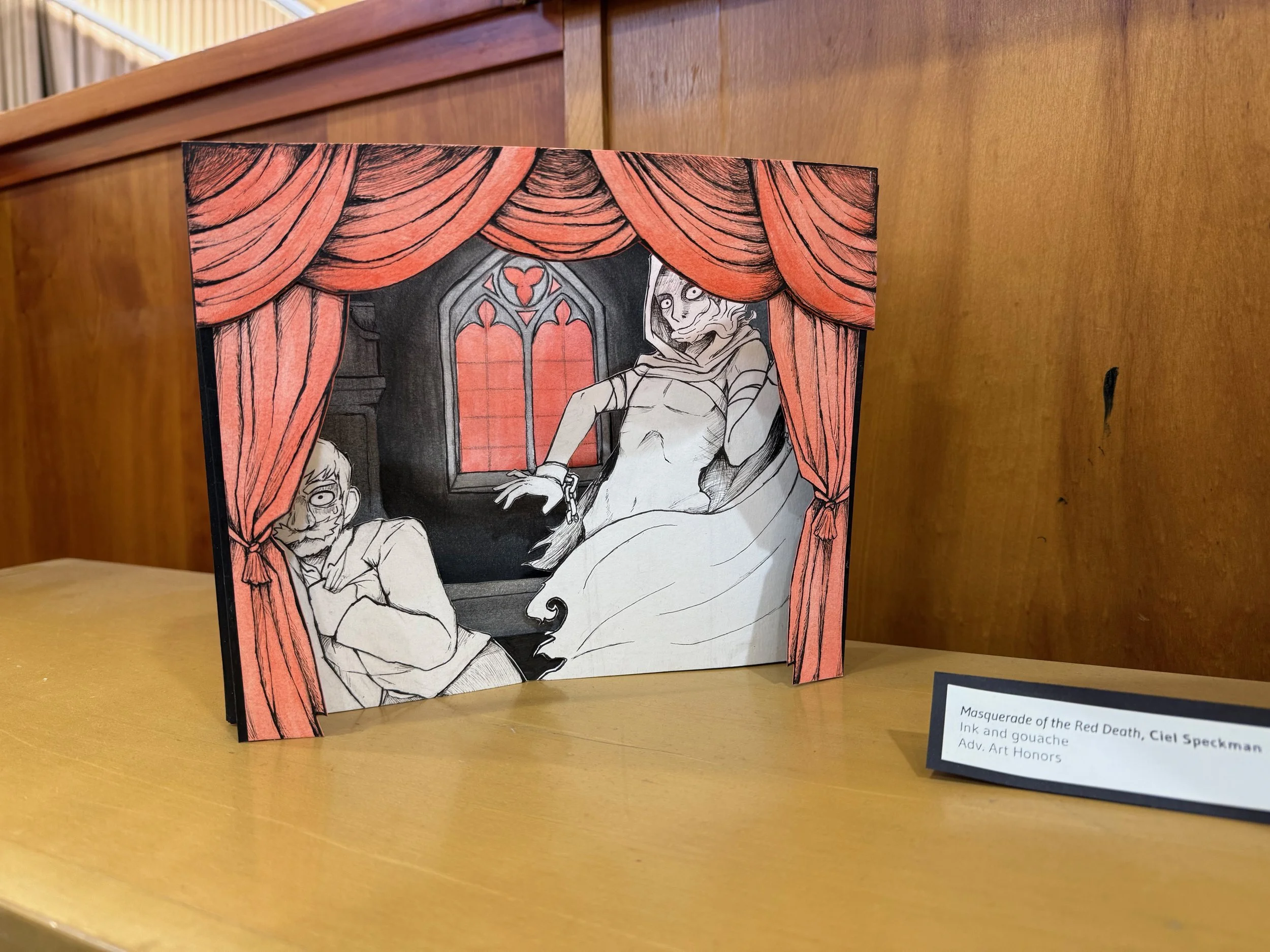
“Masquerade of the Red Death” - Diorama Ink and Gouache on paper
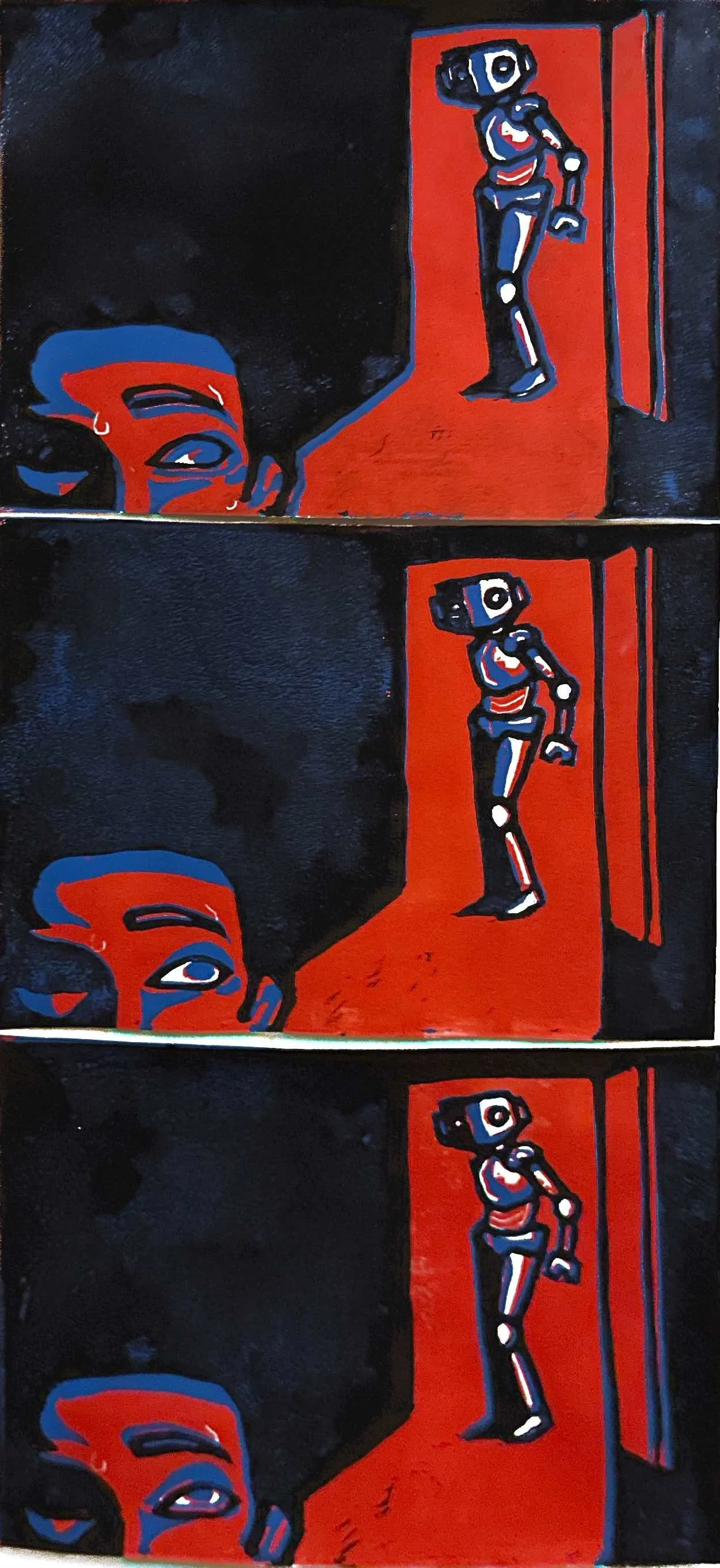
“Robot Invasion” - Linocut Ink on Paper